A Centre that is Everywhere
“The first peace, which is the most important, is that which comes within the souls of people when they realize their relationship, their oneness, with the Universe and all its powers, and when they realize that at the centre of the Universe dwells Wakan-Taka (the Great Spirit), and that this centre is really everywhere, it is within each of us. This is the real peace, and the others are but reflections of this.
The second peace is that which is made between two individuals, and the third is that which is made between two nations. But above all you should understand that there can never be peace between nations until there is known that true peace, which, as I have often said, is within the souls of men.”
Black Elk
The idea that a centre is everywhere might seem self-contradictory. After all, the word “centre” derives from the Greek kentron meaning sharp point and usually conjures up an image of a process directed from or to such a point. One might conclude that Black Elk is using poetic licence. Yet ubiquitous centres are found in science.
One example is the expansion of the universe. As Rob Coyne elucidates in The Conversation, the Universe is expanding, but not from a single point. Instead, space is being inserted between all points in the Universe. The points do not move in space; rather, space is being created between the points. If you want to think of this in terms of expansion from a centre, that centre must be everywhere.
“The identity of the individual, ‘that I am something’, is developed through interaction with a broad manifold, organic and inorganic. There is no completely isolatable I, no isolatable social unit.”
Arne Naess
The expansion of the Universe is about space-time, but a centre that is everywhere also arises in matter-energy, as The Twin Mode Mind explains more fully.
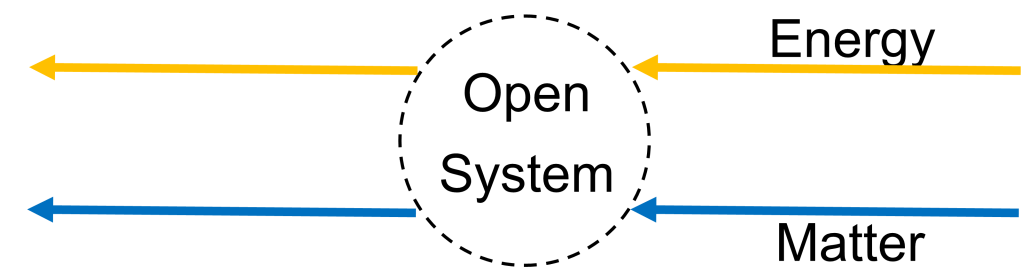
All living things are thermodynamically open, meaning they have flows of matter and energy through them. Matter and energy flow in as food, drink and breath and are excreted as waste.
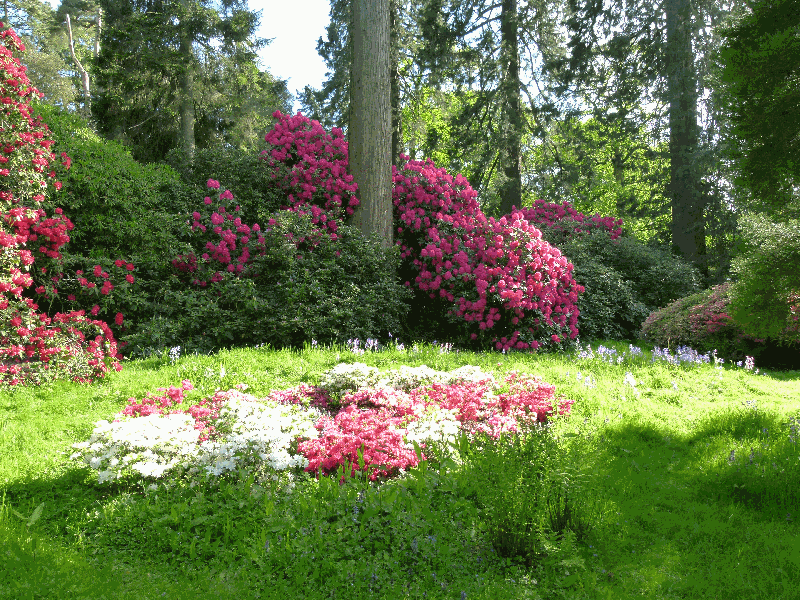
Every single thing you see in this picture is an open system. Most non-living things are also open. A lake, for example, has matter in the form of water flowing into and out of it. In general, the energy associated with the outflow will differ from that of the inflow, so there is also a through-flow of energy.
The atmosphere is open, too. Matter flows through as it exchanges gases with countless living organisms, including us as we breathe in and out. Water also flows through, via evaporation from seas and lakes, transpiration through the roots and leaves of plants and outflows as rainfall or snow. This through-flow of water is accompanied by a flow of energy.
Matter-energy can neither be created nor destroyed, but merely transformed between different forms.
The First Law of Thermodynamics
This law means that each open system must be connected to other open systems. It must acquire its matter and energy from others and donate them to other such systems.
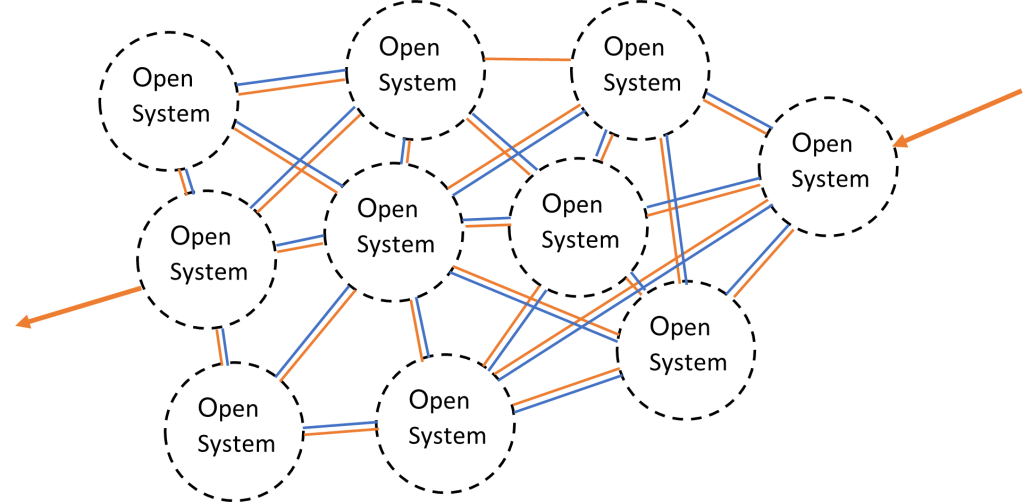
That means that open systems must form a closed network, with only energy flowing through.
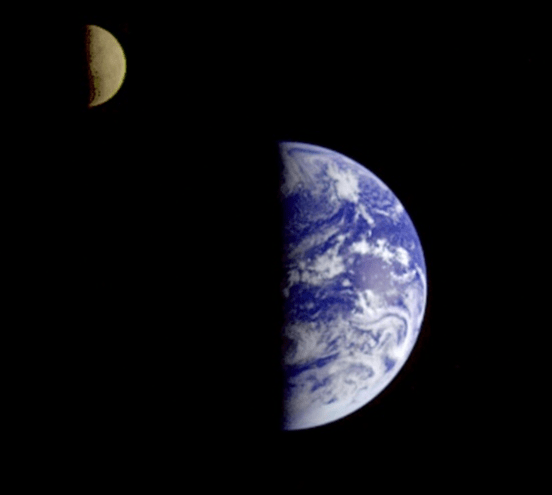
The Earth is that closed system, at least on timescales that are short by astronomical standards. Energy flows in from the Sun and out to Space.
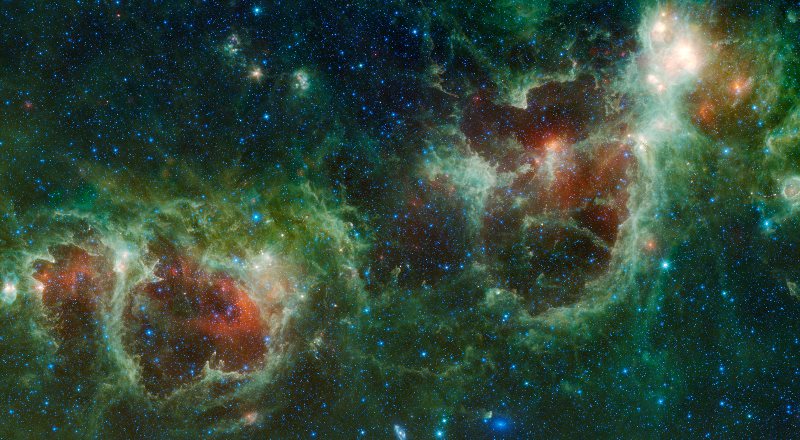
On longer timescales, planets like the Earth were formed from the material in nebulae ejected from exploding stars. So, too, were stars like our Sun, from which we receive most of our energy. Ultimately, the system from which we derive matter and energy is the entire Universe.
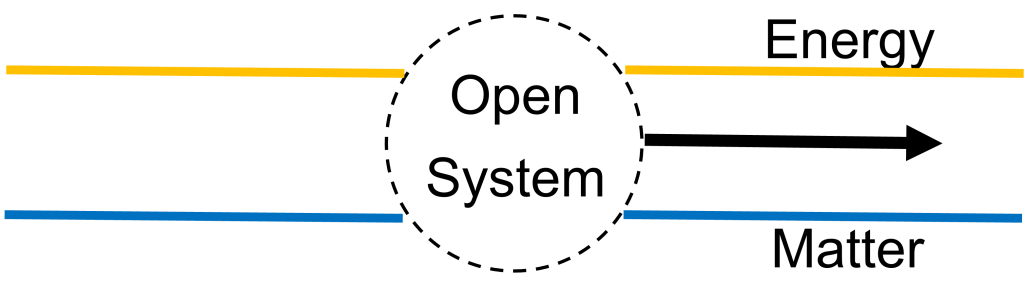
How should one regard the energy and matter flowing through one’s body? Should one say that one is the centre through which energy and matter flow, or that energy and matter are the centre and one flows through it?
Either standpoint leads to relative flow between one’s body and energy and matter. But the problem with thinking that one is the centre is that others might think that they are the centre instead. And what about all the other organisms and other open systems through which energy and matter pass? Why not consider one of them as the centre?.
We either say that there is an immense number of centres spread around the Universe, or that there is only one: the entire Universe.
Either choice means that the centre is everywhere.
